The first letter from Leonardo came from Switzerland, with two pictures included. Almost the whole top part of his head was bald. His donor zone was still full of hair – but his hair was too thin and weak. He requested an appointment for the surgery.
We gave him a surprising answer: not now. Prior to any hair restoration procedure, we suggested three PRP treatments, once every 20 days, targeting his donor zone specifically.
If a clinic puts off the execution of its own surgery, it should have a reason. In order to comprehend ours, one must be aware of what PRP is – and, even more so, what it isn't.
What people get wrong about PRP
There are two misunderstandings that appear during our consultations every single week. First, PRP grows hair on the bald skin surface. Second, PRP prevents DHT action, similar to the oral pills. Both statements are incorrect.
It is important to distinguish the three methods in accordance with their targets. Finasteride affects hormones directly. This method prevents conversion of testosterone into DHT, which inhibits follicles genetically vulnerable to its action. Minoxidil affects environment and increases blood circulation around the follicles and prolongs the growth phase. PRP is another thing: regeneration of the weakened but live follicles.
Different targets imply different mechanisms. And there is something that none of these methods can do: they cannot grow one new follicle. As a consequence, there is no possibility to fill the bald skin with hair. One sentence makes a major part of the discussion between PRP and transplant irrelevant.
What PRP really is
PRP is a term for Platelet-Rich Plasma. Blood sample is taken from you and processed using centrifuge that extracts and concentrates the platelets. This concentrate is then applied to the scalp through injection.
Platelets are your body's "repair workers". They contain growth factors – signaling proteins your body produces wherever there is need to heal the tissues. PRP wasn't originally designed to treat hair at all. It was developed in orthopedics and sports medicine to treat tendinopathies, cartilage injuries and promote wound healing – even some bone healing protocols make use of PRP. So if you trust this physiology to heal tendons and bones, think about what it could do for a weak hair follicle.
There are two other things you should know. First, PRP is autologous – it's a product obtained from your own blood, without any artificial substances added. Second, PRP is not mesotherapy – mesotherapy involves injection of an externally prepared blend of vitamins and nutrients, whereas PRP uses your own platelets.
Areas where PRP can work — and areas where it doesn't
PRP has one and only one place where it works well: miniaturized follicles that are still alive. According to the proper protocol, such follicles react to treatment. Hair shaft becomes thicker, root is fixed better, hair cycle becomes prolonged. Visually on the head, there will be an increase in thickness and color density of the hair.
What PRP cannot achieve is revival of a follicle which died and left scars. Glowing bald spots without follicles to stimulate won't yield any results regardless of the number of sessions.
And for those of you who have seen our other article that talks about the patient who had six months of PRP therapy but still ended up with a Norwood 6, don't think that this is contradictory. It's just the opposite concept of that story. PRP treatment without any help in treating genetic hair loss is a tool being used for an inappropriate purpose. If you have spent a year and serious money on PRP and watched your hairline retreat anyway, the treatment wasn't fake — it was given the wrong job. Used in its assigned role, PRP leads to a result you can measure.
The real purpose of PRP is in connection with a transplant
Then, what is the appropriate purpose? In our center, PRP therapy is planned in connection with the surgery – before it, after it or even both.
In the case of pre-surgery procedure, it is concerned with the donor area because all the future transplants originate from it, and their quality is the determinant of the final outcome. If donor hair is thin, then single, double and triple grafts created from them become fragile; they survive transplantation worse and provide less density per graft. Making the donor area stronger means taking more robust grafts with thicker shafts that both survive better and cover better.
Following the procedure, however, the PRP therapy plays another role – and it should be noted that this one often remains in the shade. First of all, it contributes to the recovery: thanks to the growth factors, which have been involved in the regeneration of the tendon and bone tissue, the recipient area starts to recover much faster and the transplanted grafts will be protected during the most dangerous period of their life.
Secondly, there is something that we see in our follow-ups, rather than in scientific works. Our patients return home after the surgery – to new water, new climate, new rhythm of life. All these changes may cause a temporary weakening of hair, whether transplanted or original, and PRP treatment helps those weakened hairs come back thicker and stronger, instead of staying fine.
Neither of the two roles interferes with the process of transplantation. They only complement each other.
A real case: Leonardo — Switzerland
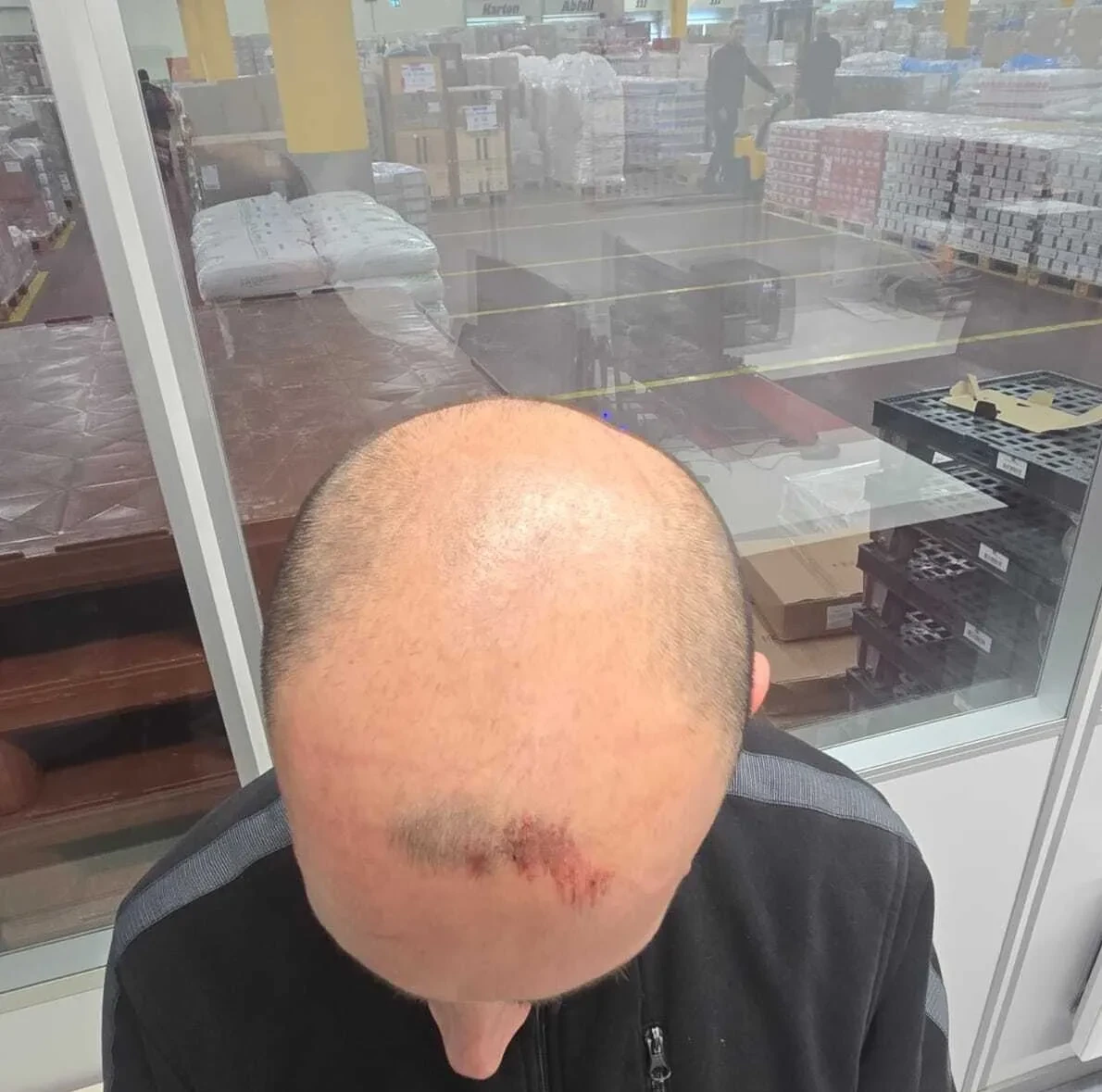

When Leonardo first applied, his photos showed a nearly bare top and a donor area of fine, weak hairs. The treatment plan which we had devised for him was a two-step procedure with extraction of 3,000 grafts during the first session.
However, there was one condition attached to this treatment procedure. Prior to the surgery, Leonardo had to have a minimum of three PRP sessions, once in twenty days, focusing particularly on his donor area. And the reason for that was simple – the single, double and triple grafts of Leonardo's donor area were fine and the fine grafts usually tend to fall out post-transplantation. This would enable us to thicken and strengthen the roots and thus yield more density.
Leonardo did exactly what we asked, and more — he completed four sessions, not three, and then flew in for surgery. At his in-clinic analysis, his donor area was no longer the one in the first photographs. The hair was denser, stronger, darker. This influenced the math of the procedure as well. Instead of taking out 3,000 grafts and asking him to come back later for another round, in one go we took 4,800 grafts and performed full coverage procedure while leaving his donor area completely natural.
The before and after pictures in this article belong to him, shared with his permission. The "after" photograph was taken exactly five months post-op — and the transplant will continue to develop up until the twelfth month. What you see is far from the final results.
What that means for your surgical approach
When used at the right time, PRP does not become a detour on your journey towards your surgery. In some cases, it can actually influence how your operation is going to unfold: less sessions, greater quantity of safe hair extraction, more robust grafts, denser results.
But there are two caveats to mention in connection with that. The first one is that not everyone's donor area reacts with such intensity as Leonardo's did. That is a case study which illustrates what can be achieved, but not necessarily should be expected. The second caveat is that not every patient requires pre-operative application of PRP at all. If you have already thick donor hair, PRP is not going to add much before your surgery.
So — PRP or transplantation?
Having gone through all this, the decision rules become pretty simple.
In case of shiny, bare areas on the scalp, only a transplant can grow hair there. It's impossible with an injection. If your hair loss is recent and widespread but your follicles are healthy, PRP, along with medication where needed, might be enough for you right now. In case of transplantation and poor condition of the donor hair, PRP should be performed first as a preparation. And, of course, PRP will be useful in recovery after the surgery.
Both procedures are available at our clinic. This is important in that respect that we are interested in neither persuading you to choose one procedure nor the other. The transplantation itself costs €2,250, all inclusive, while PRP in case of its necessity will be a matter of a clinical decision based on your analysis.
Spent months on PRP with nothing to show for it?
Send us five photos and we'll tell you honestly which side of the line your case is on: whether PRP still has a role for you, whether a transplant is what your pattern actually needs — and if so, your graft estimate. Free of charge.
Get Free Hair AnalysisMedically reviewed by the Lilian Health Clinical Team, Istanbul. All procedures are performed at a fully licensed, A+ accredited medical facility in Istanbul.
Medical disclaimer: This article is for general educational purposes only and is not medical advice. Hair loss and treatment results vary from person to person. For guidance specific to your situation, consult a qualified medical professional or book a free consultation with our team.